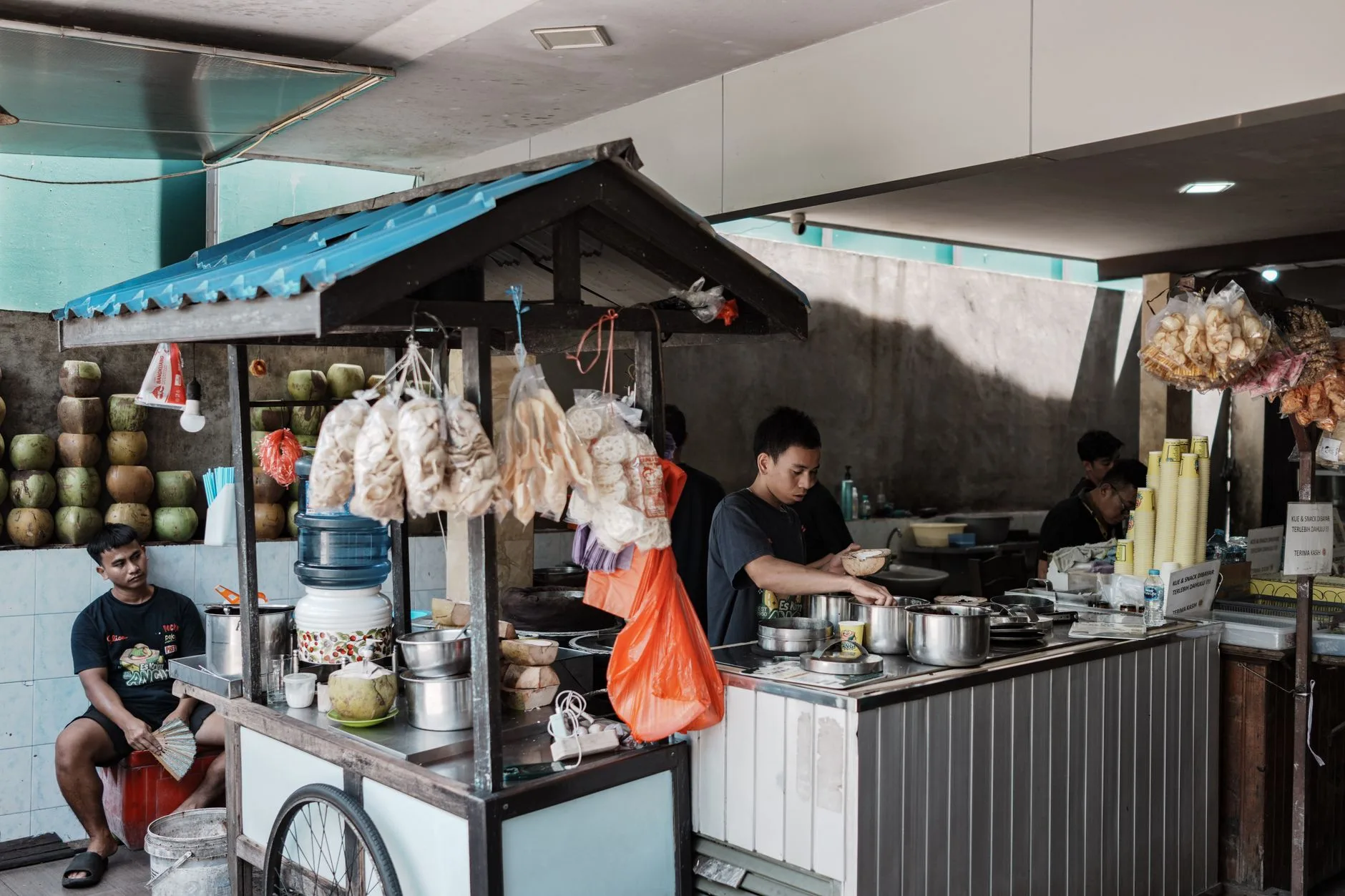
The halal certification obligation applies gradually according to product groups. UMK are among those who feel the impact most. The problem is rarely singular. There are several points that are uniquely experienced by micro and small businesses.
1. Ingredients that change without notice
UMK often buy ingredients from small suppliers or markets. When a supplier changes brands, the source of ingredients can change as well. Such changes are not always realized by business actors.
Some ingredients do have a source-dependent status. Rennet, the enzyme that coagulates cheese, is only halal if it comes from animals slaughtered according to sharia or from certified microbial sources. Gelatin is halal only if its source and slaughter are clear. Mechanically separated meat (MSM) risks being mixed with various types of animals. Animal fat and shortening may come from pork fat.
These ingredients appear in products commonly made by UMK: cheese, jelly candy, sausages, meatballs, cookies, and packaged fried foods. Without neat ingredient records, business actors find it difficult to prove their origin when documents are requested.
2. The halal product assurance system feels burdensome
Decree of the Head of BPJPH Number 57 of 2021 serves as the reference for implementing the halal product assurance system on the business actor's side. It contains five criteria: commitment and responsibility, ingredients, halal product process, product, and monitoring and evaluation. This decree was amended by Kepka 20/2023.
These five criteria require written policies, ingredient lists, production procedures, and periodic evaluation. For businesses managed by one to three people, preparing such documents competes directly with production and sales time.
3. The self-declare pathway still requires readiness
Law Number 6 of 2023 simplifies the certification process and introduces a halal statement or self-declare scheme for UMK. This scheme does ease the burden, but it does not remove the obligation. Business actors must still understand the ingredients used and ensure their production process does not come into contact with non-halal ingredients.
A common misunderstanding: self-declare is considered free of requirements. In fact, this pathway demands honesty of data and the ability to explain critical points of ingredients when requested.
4. Critical points of ingredients are difficult to trace
The tracing problem is not about willingness, but about access to information. UMK rarely receive complete technical specifications from suppliers. Ingredient names on packaging may be general terms that do not mention their source.
For risky ingredients such as gelatin, rennet, MSM, and animal fat, business actors need clear alternatives. Fish gelatin, certified beef gelatin, agar-agar, or carrageenan can replace gelatin. Microbial rennet can replace animal rennet. Palm oil, coconut oil, and vegetable margarine can replace animal fat. Processed meat products require assurance of a dedicated halal production line.
5. Layered regulatory changes
Halal rules continue to be adjusted. Decree of the Minister of Religious Affairs Number 748 of 2021 stipulates the types of products that must be halal certified along with their phasing, and was amended by KMA 944/2024. On the other hand, Law 6/2023 opens the way for the Halal Product Fatwa Committee.
For UMK, this layering of rules is difficult because the information circulating is often incomplete. Business actors need to know which rules are still in force and which have been amended.
6. Inspection quality that cannot be compromised
LPH (Halal Inspection Agencies) work by referring to SNI ISO/IEC 17065:2012, the standard for requirements for bodies certifying products, processes, and services. This standard governs impartiality, confidentiality, personnel competence, handling of complaints and appeals, and liability.
Consequently, inconsistent documents will be visible. Inspection cannot be bypassed with mere verbal statements.
What UMK need to understand
The obstacles for UMK are structural, not merely about cost. Changing ingredients, documents that must be prepared, and tracing the origin of ingredients are the three main burdens. Preparing all three from the start is lighter than fixing them in the middle of the process.
It should be noted that the determination of halalness is the authority of the MUI Fatwa Commission or the Halal Product Fatwa Committee. Halal certificates are only issued by BPJPH.
To tidy up halal policies, ingredient lists, and critical points before applying for certification, IndoHalal.id provides an SJPH platform that helps business actors manage all SJPH criteria in one application.